
Panchakarma Treatment in Ayurveda
Ayurveda is more than a system of healing. It is a science that helps us to achieve health and longevity, with various methods of purification and rejuvenation. No other system of medicine in the world has the technique of body and mind purification.
Panch = Five and Karma = Efforts. Panchakarma is an effort of healing for achieving balance in body, mind and consciousness through detoxification and rejuvenation. By detoxifying the body it improves the metabolism and immunity of our body system.
Panchakarma is undergone for both curative and preventive purposes. Annual cleansing is necessary for people who don't have time for regular exercise or fixed meal timings, or who lead a sedentary lifestyle. They must clean their body once a year according to their body constitution.
Phase 1 – Poorva Karma
a) Sneha (Oil or Ghee) Administration
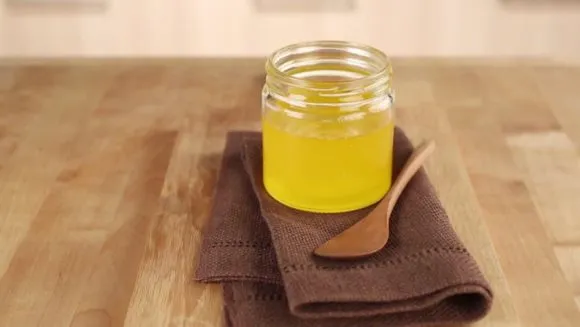
Oral route (internal ghee consumption)
The fatty substance has the power to reach the deepest cells of the body and to dislodge all toxins from where they are situated within the body, with the help of their medicinal properties.
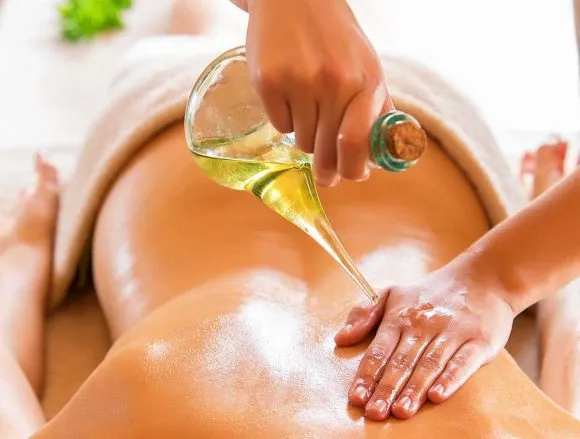
Abhyanga (external oil application)
This is a process of massage using warm herbal oil. The herbal oil used in Abhyanga is selected based on our body constitution. It helps dilute the excess amount of doshas (toxic materials) in our body.
b) Swedana (Fomentation)
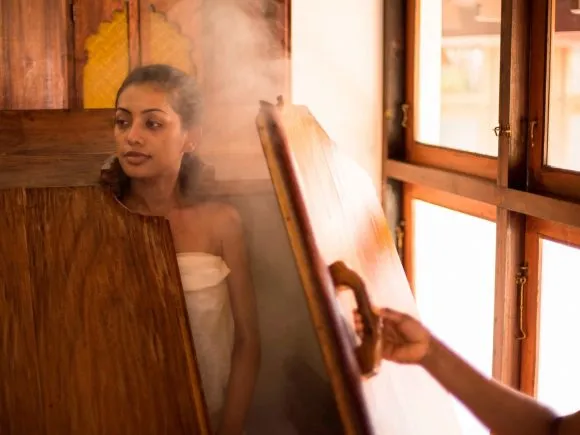
It is done after oil administration (snehan). The procedure generates sweat by various methods in our body, hence it is known as swedan.
All toxins in our body are brought to the gut (digestive tract) with snehan followed by swedan.
Phase 2 – Pradhana Karma
Pradhana karma under Panchakarma therapy is comprised of five basic types of advanced treatment for the evacuation of vitiated Dosha (toxic materials) from the body:
- Vamana (Emesis)
- Virechana (Purgation)
- Basti (Medicated Enema)
- Nasya (Nasal Infusion)
- Raktamokshan (Blood Letting)
1. Vamana (Emesis)
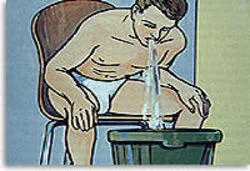
The process includes controlled vomiting sessions. Vomiting is expected to run for a definite amount of time and then it is planned to stop.
Purpose of Vamana therapy
Vamana treatment is targeted to expel increased Kapha dosha out of the body. It is performed mainly in diseases like obesity, psoriasis, chronic cough and cold, asthma and hyperacidity. Since Kapha is situated in the chest region, expelling it by the oral route is very easy. It is also performed in healthy individuals in Vasant ritu (spring) to stay fit and healthy.
The process includes external and internal oleation and fomentation therapies. Once the toxins get liquefied and gather in the upper cavities of the body, the patient is given emetic medicine. It results in controlled vomiting and finally helps to eliminate toxins from the body tissues.
Benefits of Vamana therapy
- Vitiated and aggressive Kapha dosha (toxin) is expelled out of the body.
- It boosts digestion and enhances the metabolic strength of the body.
- It improves the functioning of the sense organs, mind and intelligence.
- Improves complexion and cures skin ailments.
- It improves the chances of fertility, virility and sexual power.
- It helps in geriatric disorders and slows down the ageing process.
- Restores normal health and prolongs the quality and quantity of life.
2. Virechana (Purgation)
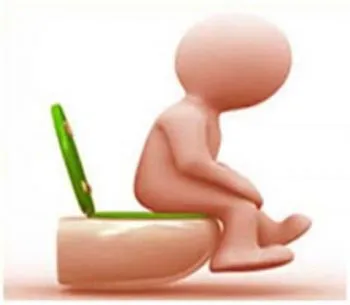
It is a medicated purgation therapy which helps to cleanse toxins that are accumulated in the liver, gall bladder and intestine.
Purpose of Virechana therapy
Virechana cleans the sweat glands, small intestine, colon, kidneys, stomach, liver and spleen. It removes toxins from the whole body, including at the cellular level.
It is mainly used to cure skin diseases, arthritis, piles, constipation, hypertension, worms, headache, paralysis and acidity. It is also performed in healthy individuals in Sharad ritu (autumn) to stay fit and healthy. The process includes external and internal oleation and fomentation therapies, followed by a herbal laxative to facilitate controlled evacuation of toxins from the body.
Benefits of Virechana therapy
- It helps eliminate toxins in Pitta-dominant conditions like skin disorders, blisters, abscesses, liver disorders, herpes zoster, jaundice, colitis, hyperacidity etc.
- Helps in treating Pitta associated with Kapha disorders like acid peptic disorder, peptic ulcers, skin problems etc.
- Very effective in fertility disorders in both males and females.
- Boosts immunity and provides strength from within.
- Restores normal health and prolongs the quality and quantity of life.
3. Basti (Medicated Enema)
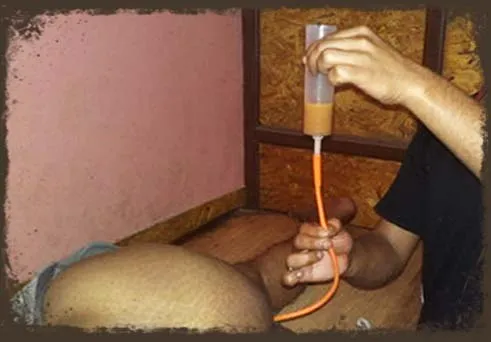
Basti denotes the procedure during which a drug is administered through the rectum. During the process, various medicated substances, in the form of decoctions or medicated oils, are released into the rectum of the patient. Ailments related to Vata disorders can be treated effectively through Basti therapy.
Basti has the topmost place in Panchakarma therapy, and it is believed to be one half of the treatment in Ayurveda.
Purpose of Basti therapy
Basti can be used to treat just about any Vata disorder. In fact, it is just about the most powerful and effective way to treat Vata, due to the direct application into the colon (the "home" of Vata). Common Vata disorders include anxiety, fear, restless mind, sleep disorders, nervous system disorders (i.e. Parkinson's), hypersensitivity, constipation, chronic gas and bloating, debility, depletion, emaciation, sciatica, gout, arthritis, osteoporosis and dryness, to name a few.
Basti is also an important Panchakarma procedure for the genito-urinary disorders of both males and females. It is also performed in healthy individuals in Varsha ritu (rainy season) to stay fit and healthy.
Benefits of Basti therapy
- Choice of treatment in female infertility.
- Basti karma is highly beneficial in cleansing and detoxifying the body.
- Restores normal bowel movements.
- Excellent results in joint disorders like osteoarthritis, gout, osteoporosis etc.
- Improves the functioning of the nervous system.
The treatment helps the colon expel toxins. Similar to western enemas, Basti karma increases colonic peristalsis, producing rapid elimination of the faeces.
4. Nasya (Nasal Infusion)
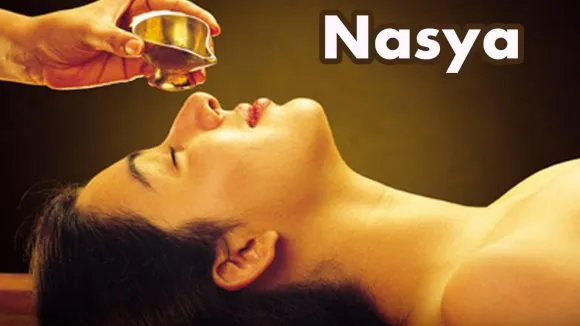
It is a process by which medicated oil is administered through the nostrils. The most common Nasya treatment includes the application of ghee or oil, sometimes with additional powdered herbs.
Purpose of Nasya therapy
This is a very useful Panchakarma therapy for diseases of the upper part of the body. Nasya removes toxins from the head, which results in clarity of mind. It is regularly used to treat stress, premature greying of hair, headaches, anxiety, sleep disorders, sinusitis, colds, allergies and depression.
Benefits of Nasya therapy
- Pain management: Nasya is beneficial in the treatment of headaches, migraine and cervical spondylosis. Medicated oils or powders stimulate some vital centres of the brain that reduce pain perception.
- Stress reduction: It stimulates the vital centres of the brain that regulate emotions, and so minimises stress and anxiety.
- Skin and hair care: With regular treatment, Nasya can improve skin complexion. It can also improve hair texture and prevent greying of hair.
- Paralysis: As mentioned in Ayurveda, the nose is the opening to the brain, so it is very effective in paralysis recovery.
- Elderly care: Nasya improves the functioning of the sense organs (eyesight, hearing, speech etc.) and so delays age-related changes.
- Eye care: Medications administered through the nasal cavity act on the specific areas of the brain that are involved in regulating vision.
5. Raktamokshan (Blood Letting)
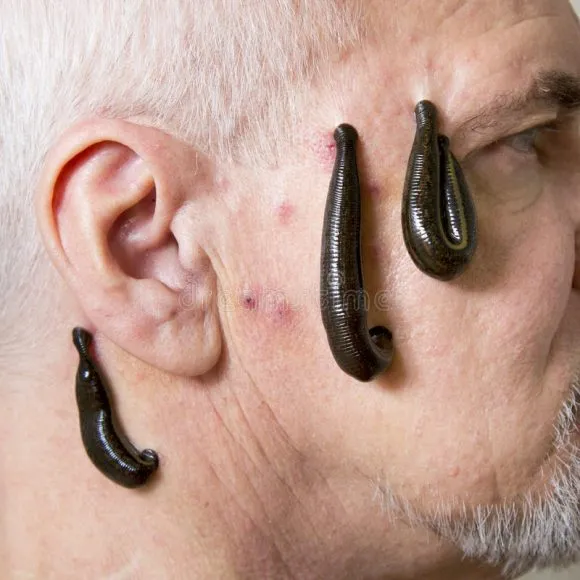
Raktamokshana is an effective blood purification therapy, in which carefully controlled removal of small quantities of blood is conducted to neutralise the accumulated Pitta toxins of many blood-borne diseases. Raktamokshana decreases the quantum of enhanced Pitta dosha, and so the diseases caused by Pitta are also relieved.
Purpose of Raktamokshan
This is one of the best therapies for blood disorders mentioned in Ayurveda. It is helpful for varicose veins, skin diseases, psoriasis, liver diseases, splenomegaly, tumours, sciatica, migraine and joint diseases.
Benefits of Raktamokshan
- All types of skin diseases can be treated with Raktamokshana, including acne, herpes, psoriasis, lichen planus, leukoderma etc.
- Raktamokshana helps in the treatment of hyperlipidaemia. Heart disease and hypertension can be treated with its help.
- Gout (high levels of uric acid in the blood) can be treated with the help of Raktamokshana.
- Raktamokshana gives the best results in the treatment of obesity.
- Raktamokshan is very beneficial in eye diseases like glaucoma, conjunctivitis, uveitis and hypertensive retinopathy.
Phase 3 – Paschat Karma
Paschat karma is the follow-up therapy, which includes diet, medication and lifestyle.
After the toxins have been effectively eliminated, patient-specific diet regimens, controlled physical effort and health-promoting natural herbal remedies are recommended. These support and enhance the successful effects of the two previous stages of Panchakarma treatment.
Other Important Panchakarma Therapies
Some other important therapies under Panchakarma involve both oleation and fomentation at once.
Uttar Basti
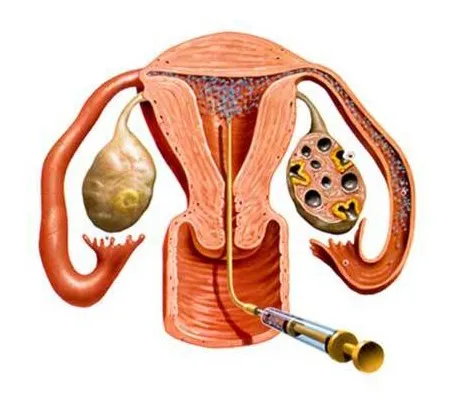
The Basti directed through the urinary passage (urethra) in men and women, and through the vaginal tract in women, is called Uttar Basti. It is the Basti given through uttara marga (the passages at the front of the body, i.e. the urethral and vaginal openings). Uttar means "best"; since Uttar Basti bestows uncommon advantages, it is called Uttar Basti.
Uttar Basti is aimed at disorders of the urinary and genital systems. In this procedure, medicated oils and ghee are administered through the urethral or vaginal routes.
Advantages of Uttar Basti
- The treatment is useful for genitourinary diseases and infertility in females.
- It is useful in infertility, spontaneous abortions, recurrent abortions, fibroids, tubal blockages, DUB etc.
- Uttar Basti per urethra is useful in benign prostate enlargement (BPH), urinary incontinence, urethral stricture, recurrent urinary tract infections (UTI), bladder atony, cystitis and male infertility.
Shirodhara
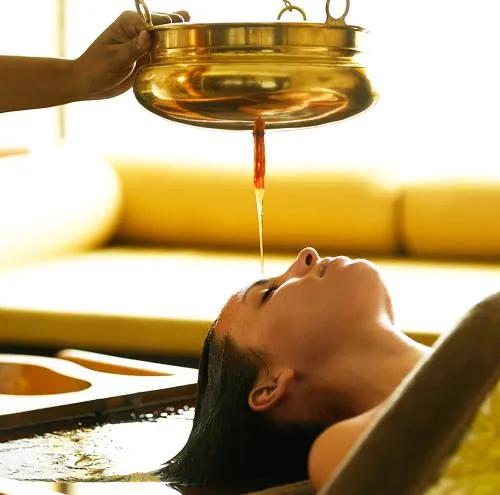
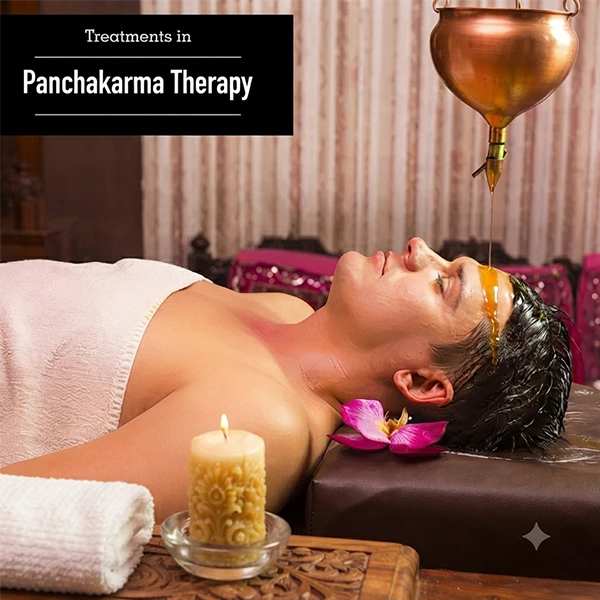
This is a specialised therapy aimed at relieving ailments related to the head region. In this therapy, a stream of warm oil is poured on the centre of the forehead from a vessel at a uniform speed.
The temperature and speed of the oil stream are kept constant during the therapy, which goes on for 30 to 60 minutes.
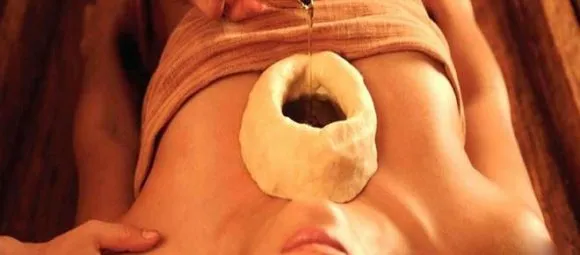
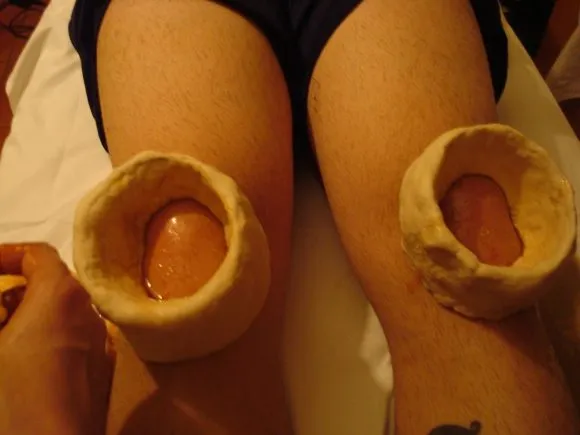
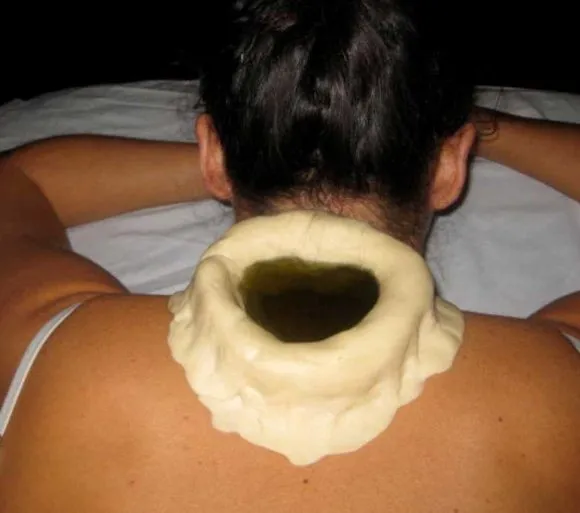
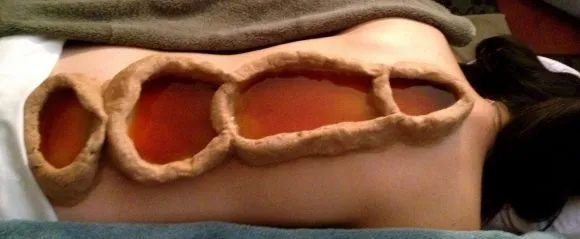
Sthanic Basti
This is a specialised form of the Basti procedure, designed as a local pain reliever. It gives strength to the local part after the increased Vata at that particular site subsides. It is useful in nerve decompression, slip disc etc. These include:
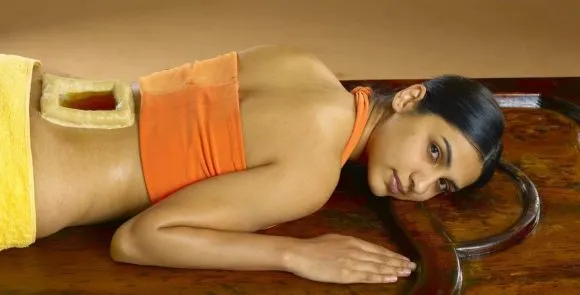
Patra-Pottali Sweda (Specialised Massage Therapy Using Herbs)
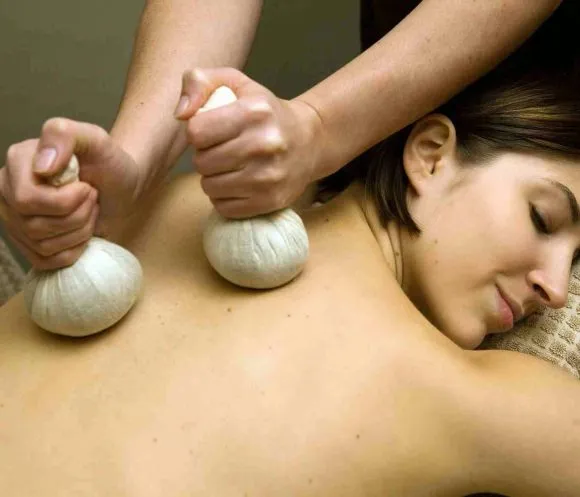
It is a highly rejuvenating treatment in which fresh plant leaves are fried with several beneficial herbal ingredients, tied into a cloth, dipped into warm medicated oil and used for massaging the body. It is administered after Abhyanga (specialised oil massage therapy).
It is effective in chronic back pain, loss of function of a part or a whole limb, joint stiffness and swelling, sciatica, spondylosis, sprains, cramps, muscular pain etc. It also possesses anti-ageing and rejuvenating properties.
Contraindications of Panchakarma Therapy
Certain medical conditions are not appropriate for Panchakarma. These include:
- Pregnancy
- Menses
- Lactation
- Lympho-sarcoma
- Cancer of the lungs or testicles
- Melanoma
- Angina pectoris
- HIV or AIDS
- Emaciation
- Extreme obesity
- Hypertension
- Congestive heart failure
- Any active infectious disease
Talk to our doctor about your case
Share your reports and get an assessment from our Ayurveda doctors — online or at the clinic.